Television judge Greg Mathis has shared his thoughts on the death of Mississippi teenager Nolan Wells, saying he believes the publicly available evidence raises enough questions to justify a more thorough investigation.
Speaking on The Art of Dialogue podcast, Mathis said he is not convinced by the theory that the 18 year old accidentally drowned after being left on Horn Island during a Fourth of July boating trip.
“I don’t believe he drowned. I believe he was killed,” Mathis said. “But I’m a judge that has to weigh all the evidence preliminarily. That’s what I see.”
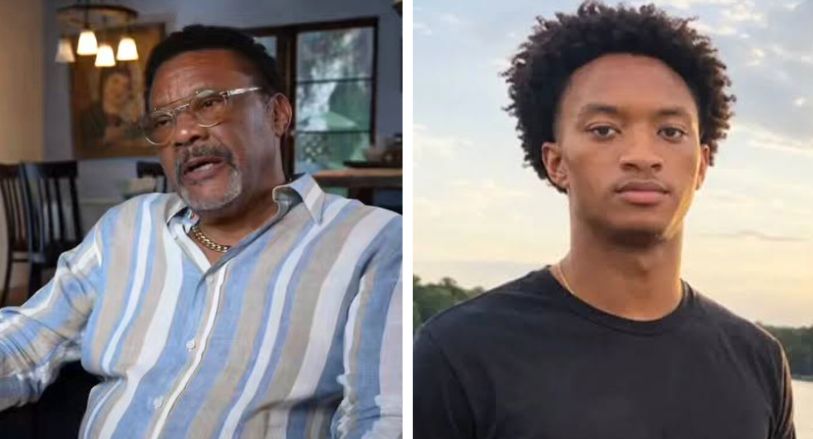
Mathis questioned the explanation that Wells voluntarily stayed behind on the island after the group’s boat reportedly experienced mechanical problems. He said it made little sense for friends to leave him behind, particularly if they later realized he no longer had his cellphone.
“You don’t leave your friend on an island, seeing that he has left his phone, and not at least go back,” Mathis said. “You came there with him. You left him there. You say because he wanted to stay, but you notice that he’s left his phone. How was he gonna get home in the first place?”
His comments come as Wells’ family continues to push for answers following an independent autopsy commissioned by civil rights attorney Ben Crump.

According to Crump, forensic pathologist Dr. Roger Mitchell concluded that both the cause and manner of Wells’ death were undetermined. Mitchell also said he could not rule out foul play and noted that he was unable to fully evaluate certain evidence because parts of Wells’ body had already been removed during the state’s initial autopsy.
“This is only another part of the puzzle,” Crump said after releasing the report. “Even though it tells us significant information, we still have more questions than we have answers at this time.”
Wells disappeared during a boating trip to Horn Island on July 4, and his body was recovered by a park ranger two days later. Mississippi authorities initially said they believed he had drowned, but the official autopsy and toxicology reports have not yet been released publicly.
Based on the information available so far, Mathis argued that investigators have enough to establish what he described as “reasonable suspicion that a crime has been committed.”
:max_bytes(150000):strip_icc():focal(749x0:751x2)/united-cajun-navy-search-nolan-wells-072126-1d3dcdb1037f4cb7b495c420c22ae89c.jpg)
He also stressed that the outcome of any grand jury review depends on the evidence prosecutors decide to present.
“The question becomes: Is the prosecutor going to do a thorough investigation and presentation to the grand jury?” Mathis said. “Because if they don’t, if they miss some parts of the evidence that is necessary, then the grand jury has nothing to consider.”
Mathis said investigators should closely examine Wells’ cellphone, reports that Snapchat content may have been deleted, and other digital evidence. He also referenced Mississippi’s history of racially charged cases, saying the investigation would likely face increased public scrutiny.
“Mississippi really has a bad reputation, and this once again is reinforcing it,” he said.

Crump has continued calling for a broader investigation, arguing that conflicting witness statements, cellphone evidence, and the findings of the family’s independent autopsy all deserve closer review.
The family’s search for answers has attracted support from several prominent figures, including Colin Kaepernick, Tyler Perry, Byron Allen, and Al Sharpton.
When asked what strategy he would pursue if he were part of Wells’ legal team, Mathis said the next step is straightforward.
“The objective would be to get it in front of the grand jury,” he said. “Ben’s done that. Let’s see what happens.”