The harrowing film tells the remarkable story of a Polish nurse who risked her life to save Jewish people during the Holocaust.
Netflix viewers have been turning to Irena’s Vow for a powerful and deeply moving story set against one of the darkest periods in history.
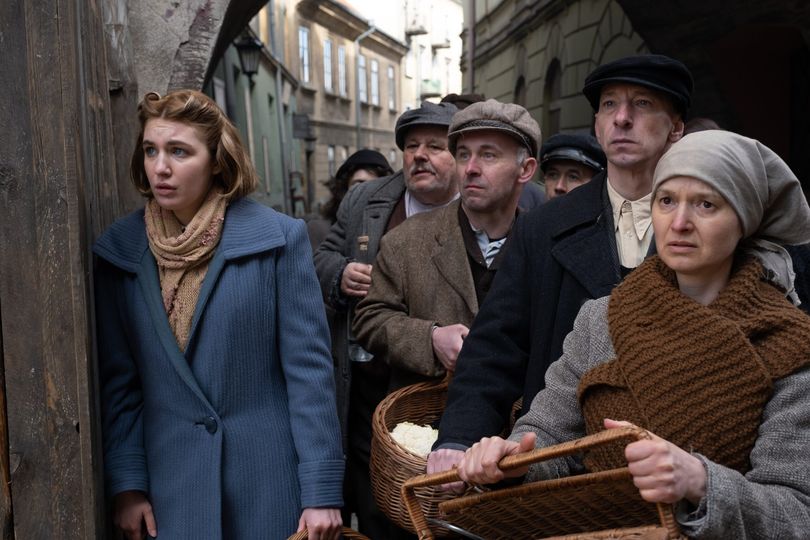
Set in Poland during the Second World War, the drama follows Irena Gut Opdyke, played by Sophie Nélisse, a Polish nurse who secretly sheltered Jewish people from the Nazis while working as a housekeeper for German Army officer Major Eduard Rügemer, portrayed by Dougray Scott.
Filmed in Poland, Irena’s Vow also earned recognition at international film festivals in Windsor and Vancouver. Its story centers on courage, sacrifice and the determination of one woman who risked everything to protect people facing persecution.
But just how much of the film is based on reality?
Is ‘Irena’s Vow’ Based on a True Story?

Yes. Irena’s Vow is based on the real-life story of Irena Gut Opdyke, a Polish nurse who became internationally known for helping Jews persecuted by Nazi Germany during World War II.
Her actions eventually led to her being recognized as a Righteous Among the Nations, an honour given to non-Jews who risked their lives to save Jews during the Holocaust.
Gut Opdyke was officially recognized for saving 12 Jewish people.
Her story began before the full horror of the war had unfolded. After her father encouraged her to train as a nurse, she enrolled at St. Mary’s nursing school.
Her life changed dramatically following the Nazi-Soviet invasion of Poland in 1939.
While attempting to hide during the invasion, she was discovered by Russian soldiers. She was later hired by Wehrmacht Major Eduard Rügemer, initially working in a hotel kitchen that served Nazi officials before becoming a housekeeper at his villa.
That position ultimately gave her an opportunity to help people who were being hunted.
Irena Hid 12 Jews in a Cellar
While working at Rügemer’s villa, Gut Opdyke secretly hid 12 Jewish people in the cellar.
The people she was protecting remained concealed while Rügemer was around. When he was away, they would emerge and help Gut Opdyke with cleaning around the house.
The arrangement became increasingly dangerous when Rügemer eventually discovered that she had been hiding Jewish people.
According to the story of her life, he allowed them to remain there on the condition that Gut Opdyke become his mistress.
She continued protecting the people in her care.
In 1944, as Russian forces advanced, Rügemer fled with the Germans. Gut Opdyke and several of the Jewish people she had helped eventually made their way to Allied-occupied Germany.
What Happened to Irena Gut Opdyke After the War?
After the war, Gut Opdyke was placed in a Displaced Persons camp.
It was there that she met William Opdyke, a United Nations worker from New York City who would later become her husband.
Gut Opdyke eventually emigrated to the United States, where she married William. The couple later had a daughter together.
For many years, however, she remained largely silent about what she had experienced during the war.
That changed in 1975.
Gut Opdyke decided to speak publicly after hearing a neo-Nazi claim that the Holocaust had never happened. The experience convinced her that remaining silent could allow dangerous misinformation to spread.
She subsequently began a career as a public speaker and eventually wrote about her experiences in her memoir, In My Hands: Memories of a Holocaust Rescuer.
Why Irena’s Story Still Matters
For Sophie Nélisse, playing Gut Opdyke was about more than portraying a historical figure.
The actress told National Catholic Register that she was immediately drawn to Irena’s story because of its relevance to the present day. Despite the horrific circumstances surrounding her life, Nélisse saw a message of hope in her actions.
That sense of hope is also central to the way Gut Opdyke’s family remembers her legacy.
Her daughter, Jeannie Smith, explained that her mother eventually came to see speaking about the Holocaust as a personal mission.
Smith recalled that Gut Opdyke’s decision to speak publicly was prompted by a conversation with a young Holocaust denier who was doing a school report about propaganda.
That moment made Gut Opdyke realize that if she did not share what had happened, history could potentially repeat itself.
For Smith, watching her mother begin telling her story was difficult, particularly in the early days when the memories were still deeply painful.
A Story of Courage in the Face of Unimaginable Danger
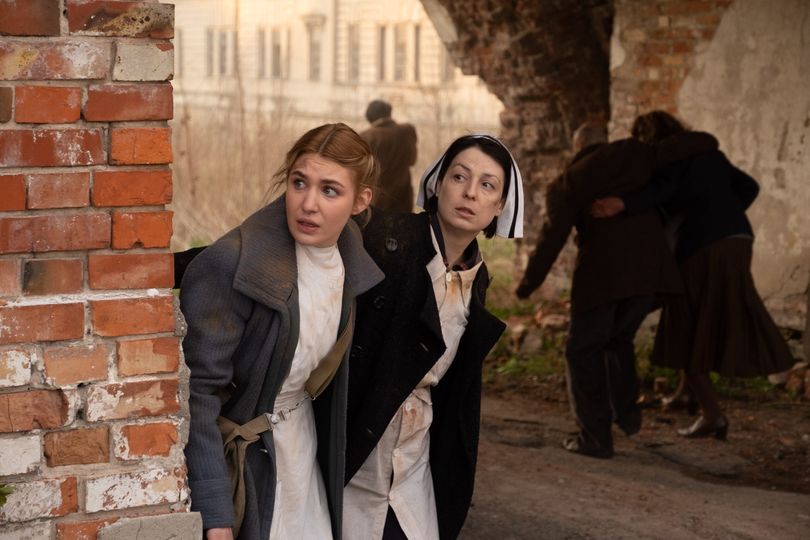
Irena’s Vow brings one of the lesser-known personal stories of the Holocaust to the screen, focusing on a woman who used the position she had been given to protect people whose lives were in immediate danger.
Irena Gut Opdyke’s story is ultimately one of extraordinary courage, but it is also a reminder of why personal testimony matters.
By choosing to speak about what she witnessed and endured, she helped ensure that the experiences of those persecuted during the Holocaust would not simply disappear into history.
Her decision to protect 12 people came at enormous personal risk. Decades later, her decision to tell that story became another way of standing against denial and preserving the truth.
That combination of bravery, sacrifice and remembrance is what makes Irena’s Vow such a powerful World War II drama — and explains why the real story behind the film continues to resonate with audiences today.
Source: Compiled from various sources