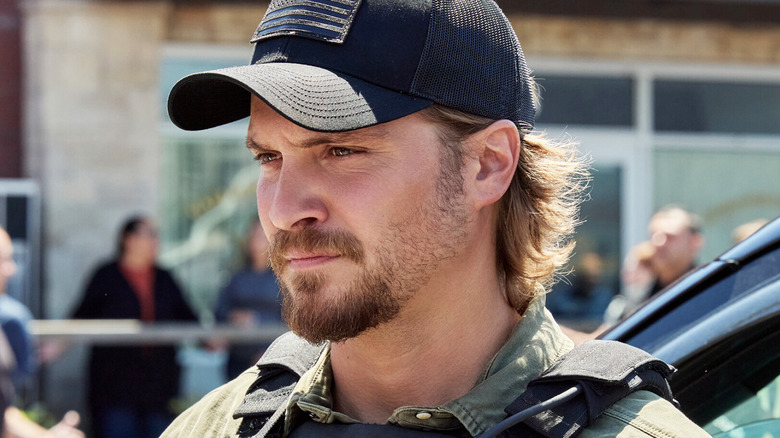
After spending much of Marshals Season 1 on the sidelines, Tate Dutton may finally be getting a meaningful story of his own. The latest episode of the Yellowstone spin-off revisits the teenager’s emotional struggles following a traumatic kidnapping, raising the possibility that Season 2 will explore how the Dutton family legacy continues to shape his future.
Played by Brecken Merrill, Tate has long been an important part of the Dutton family story. However, Marshals has struggled to give him consistent attention, often introducing developments that seem poised to launch his character arc before shifting focus elsewhere.
Season 1 had plenty of competing priorities. The series needed to introduce a new ensemble, develop Kayce Dutton’s life after Yellowstone, and deliver a weekly law-enforcement case. Balancing those elements has sometimes come at the expense of the personal drama that made the original series compelling.
For Tate, that lack of focus is particularly frustrating. His mother, Monica Dutton, played by Kelsey Asbille, died of cancer after exposure to pollution from a mine, leaving him to navigate grief alongside his father, Kayce, played by Luke Grimes. Given everything the teenager has endured, his emotional response to these losses deserves more attention.
Tate’s Latest Ordeal Could Change His Future
The Season 1 finale left Tate in the hands of dangerous rancher Tom Weaver, played by Chris Mulkey. In the Season 2 premiere, viewers learned that Weaver had sent armed men to Kayce’s home to assassinate Chief Thomas Rainwater, portrayed by Gil Birmingham.
The confrontation ended with Tate shooting one of the intruders, adding another traumatic experience to a life already marked by violence and loss. Although the incident could have provided an opportunity to explore the teenager’s psychological struggles, it initially seemed as though the series was once again moving too quickly past his experiences.
Season 2, Episode 2, titled “End of Watch,” offers a more promising development. After rescuing Tate from Weaver, Kayce installs additional security measures around his property, determined to prevent anyone from threatening his son again.
But Kayce’s concerns extend beyond physical safety. When he goes looking for Tate, he finds him at the grave of his grandfather, John Dutton.
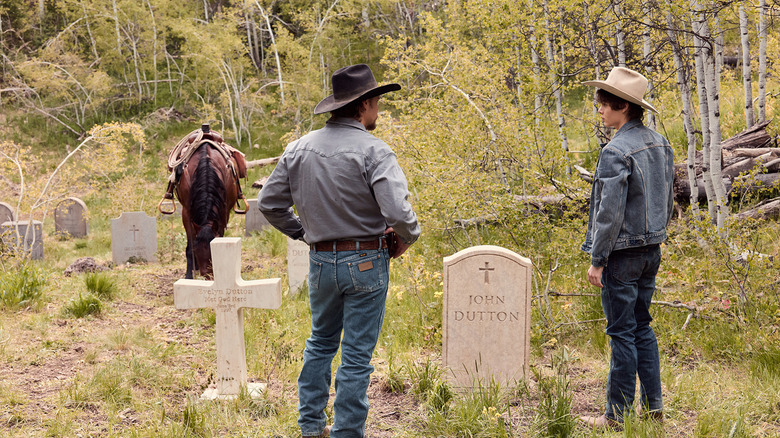
Reflecting on what happened, Tate acknowledges the evil he saw in Weaver and admits that he once thought the rancher shared similarities with John.
“Mr. Weaver was evil,” Tate tells his father. “I can’t believe I thought he was anything like grandpa.”
Kayce, however, understands that the truth about his father is more complicated than Tate realizes. John Dutton could be ruthless, and Kayce knows that being part of the Dutton family means confronting a legacy that often brings violence and suffering.
“Our family legacy was never about land,” Kayce tells his son. “It was about always having to fight. It takes a heavy toll, son.”
Tate’s response reveals how deeply he identifies with his family, despite the pain that identity may bring.
“Good thing I’m strong,” he replies. “Because you and grandpa raised me to be. It’s the Dutton way.”
The Dutton Legacy Could Become Tate’s Biggest Struggle
Tate’s declaration introduces an intriguing conflict that Marshals could explore throughout Season 2. To him, the Dutton legacy represents strength and resilience. To Kayce, however, that same inheritance comes with a devastating cost.
Having witnessed the consequences of his family’s history, Kayce wants to protect Tate from repeating the same cycle. Yet his son appears proud of the very qualities that could draw him deeper into it.
That tension could give Tate a compelling coming-of-age storyline, forcing him to reconcile his admiration for John with the reality of the violence that surrounded his grandfather’s life.
The episode also suggests that Tate’s latest kidnapping may have consequences that emerge gradually. Andrea Cruz, played by Ash Santos, asks Kayce whether his son is doing all right and recalls that Tate experienced a kidnapping when he was younger on Yellowstone.
Kayce indicates that he expects Tate to experience a delayed emotional reaction to what happened. If the series follows through on that possibility, it could finally examine how repeated trauma affects the teenager rather than treating each incident as another plot development.
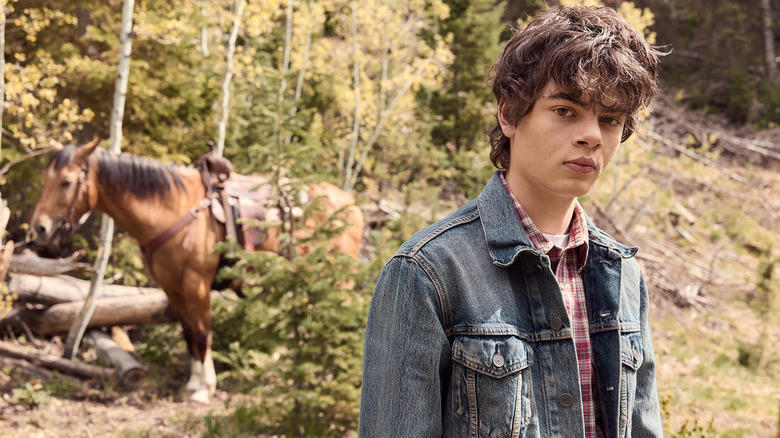
Can ‘Marshals’ Make Room for Tate’s Story?
Despite the promising scenes, there is still a question about whether Marshals can sustain a storyline centered on Tate.
Much of Episode 2 remains focused on Kayce’s concerns about fatherhood and his complicated feelings toward John. Those themes are relevant to Tate’s future, but the show must give the teenager enough screen time to develop his own perspective and emotional journey.
The series’ procedural structure presents a challenge. With a new case to solve each week and a growing cast of characters to develop, the writers have limited room to explore every personal storyline in depth. Even when an investigation reflects the episode’s broader themes, the central human drama can struggle to receive the attention it needs.
Still, Tate’s situation offers an opportunity to connect Marshals more directly to the emotional legacy of Yellowstone. His experience could become a defining part of the new series if the writers explore his grief, his relationship with Kayce, and his belief that carrying the Dutton name means learning to fight.

There is also a potential model in Carter Dutton, played by Finn Little, whose personal development is being explored in Dutton Ranch. Giving Tate a similarly meaningful arc would help ensure that his role extends beyond being Kayce’s son.
For now, “End of Watch” offers a promising glimpse of what Tate’s future could hold. Whether Marshals follows through remains uncertain, but the character has more than enough history, trauma, and family conflict to support a substantial storyline in Season 2.
Source: Compiled from various sources