The investigation into the death of 18 year old Nolan Wells is facing growing scrutiny as new details highlight a lengthy delay in the emergency response and fresh questions emerge about how authorities handled the case from the very beginning.
Wells disappeared during a Fourth of July outing on Horn Island, a barrier island about 10 miles off the Mississippi Gulf Coast. His body was discovered two days later by a National Park Service ranger on the island’s northwestern shoreline.
Since then, public attention has focused on what happened during the crucial hours after Wells was reported missing.

Questions surround a 13 hour delay
According to officials, the U.S. Coast Guard received its first notification about a missing person near Horn Island at approximately 11 p.m. on July 4.
However, Petty Officer Cheyenne Basurto said the information initially provided did not indicate a maritime emergency that required Coast Guard intervention.
Because Wells was reportedly believed to be on the island rather than stranded in open water, the incident was treated as a land based missing person case rather than a search and rescue operation at sea.
As a result, the Coast Guard did not immediately deploy helicopters or rescue crews.
Federal assistance was not officially requested until 12:26 p.m. the following day, when the Jackson County Sheriff’s Office asked the Coast Guard to join the search, more than 13 hours after the original report.
The timeline has sparked criticism from supporters and legal advocates who believe every hour was critical.
Why local authorities led the investigation

Although Horn Island is part of the federally managed Gulf Islands National Seashore, responsibility for investigating missing persons falls primarily to local authorities under shared jurisdiction agreements.
Because Wells lived in Ocean Springs and his mother filed a missing person report with the Jackson County Sheriff’s Office shortly after midnight, county investigators became the lead agency.
National Park Service rangers assisted with the search, but Jackson County retained overall responsibility for the investigation.
Friends said Wells chose to stay behind
Investigators have said the initial response was shaped by statements from the teenagers who traveled to Horn Island with Wells.
According to Sheriff John Ledbetter, the group reported that their boat developed mechanical problems involving its bilge pump and they decided to return to shore around 4:30 p.m.
They allegedly told investigators that Wells chose to remain on the island because he planned to spend time with other people before finding another ride back to the mainland.
“From the people we’ve talked to, it sounds like he chose to stay on the island,” Ledbetter previously said.
Believing Wells had voluntarily remained on land, authorities initially handled the case as a routine missing person investigation rather than an emergency water rescue.
Family rejects that explanation

Wells’ parents have repeatedly challenged that version of events.
His father, Elmore Wonsley, said Nolan had always been taught never to separate from the group he traveled with.
“We always taught him, ‘If you go with a group, you stay with the group,'” he said.
The family has also questioned why Wells’ cellphone and house keys were reportedly left on the boat if he truly intended to remain behind.
Civil rights attorney Ben Crump, who now represents the family, has called for a full and transparent investigation and arranged for an independent autopsy.
Crump has also pointed to cellphone video recovered from Horn Island, claiming a voice can be heard saying, “Give me my freaking phone.”
His legal team believes the voice belongs to Wells.
Best friend disputes viral video claims
One of Wells’ closest friends, Jayvon Williams, has publicly challenged that interpretation.
Speaking with TMZ Live, Williams said he was among the last people to see Wells alive but claims investigators had not interviewed him despite his presence on Horn Island that day.
“I have nothing to hide,” Williams said. “That’s my boy and I want him to find justice.”
Williams also said he does not believe the voice heard in the widely shared video belongs to Nolan.
“I feel like the voices are too clear for it to be Nolan arguing,” he said.

Instead, Williams believes the recording captured another young man who had become upset during a separate confrontation and was being persuaded to leave the island.
He also admitted he remains confused by the overall sequence of events.
“This whole situation… none of this adds up honestly,” Williams said.
When asked whether race may have played a role, Williams initially declined to speculate before later saying he did not personally view the incident as being about race, although he understood why others had raised questions because of the unanswered details.
Investigation remains active
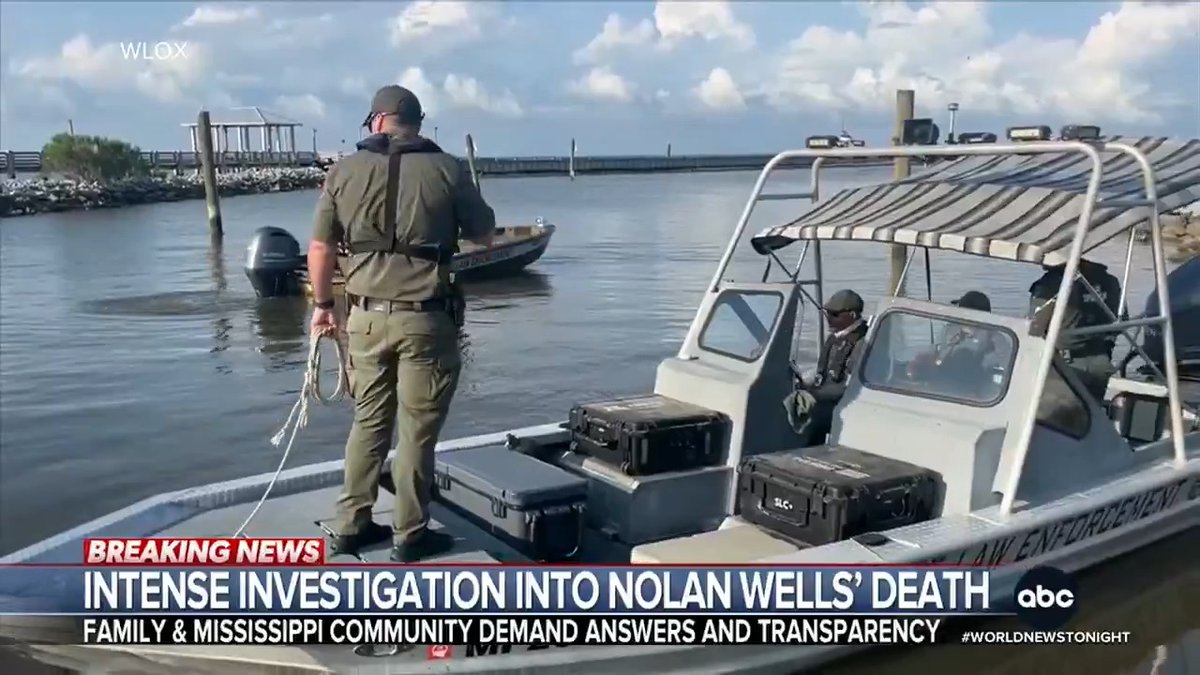
The Jackson County Sheriff’s Office continues to describe Wells’ death investigation as active.
Sheriff Ledbetter has urged the public not to jump to conclusions while detectives continue interviewing witnesses and reviewing evidence.
“We’re working toward the same goal as the family,” Ledbetter previously said. “We want a thorough investigation. We’re trying to find out everything.”
Authorities have not publicly responded to Williams’ claims or confirmed whether he has since been interviewed.
Investigators have also not changed their earlier statement that the available evidence appears consistent with an accidental drowning, while emphasizing that the final determination will depend on pending forensic testing, toxicology results, and the independent autopsy requested by Wells’ family.
Until those findings are complete, many questions surrounding Nolan Wells’ final hours on Horn Island remain unanswered, and both investigators and his family continue searching for the full truth behind the tragedy.